Is Crypto in Serious Trouble Right Now as Investors Face a Market Crash?
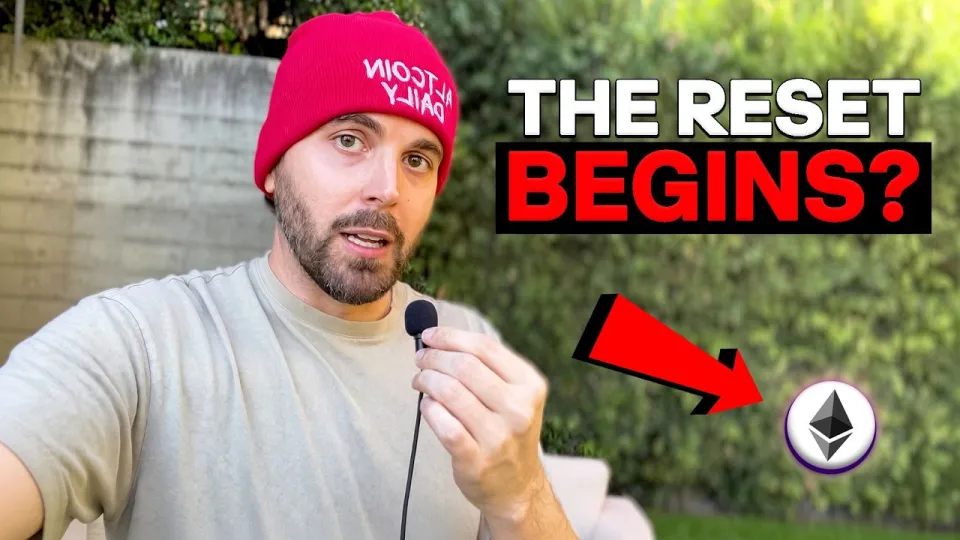
Video: Crypto Investors Are In Serious Trouble (market crash)
Need articles like this for your video? They help promote it on YouTube and Google — order them in the Telegram bot @sat_sit_bot. The bot writes and publishes the articles itself (with your YouTube video embedded) on popular topical websites (no ads). Your first 50 articles are free.
· based on the channel Altcoin Daily
Crypto investors are in serious trouble because the current selloff has pushed Bitcoin and most altcoins into a sharp drawdown, and the Altcoin Daily breakdown of the crash explains why this phase is painful for anyone who bought near the highs. The video frames the drop as a real market crash rather than a routine pullback, and it walks through what that means for portfolios, conviction, and buying strategy. One data point shared in the discussion sets the tone: as of October 24, 2026, Bitcoin sat at $80,707, giving it a five-year compound annual growth rate of just 5.78% — a number that undercuts the idea that holding always produces spectacular returns.
What the crypto market crash means for investors in 2026
A market crash in crypto means prices fall faster than most holders can react, and the damage is concentrated in assets bought at cycle highs. The Altcoin Daily video treats the current environment as exactly that: a broad decline that leaves leveraged traders liquidated and long-term holders underwater on recent entries. The key distinction is between a crash that breaks the thesis and one that resets valuations. Nothing in the discussion suggests Bitcoin or major altcoins have lost their long-term function; what has changed is the price path and the patience required to sit through it. The five-year CAGR of 5.78% quoted for Bitcoin at $80,707 is a useful reality check, because it shows that even the largest crypto asset can deliver mediocre annualized returns over a multi-year window when the entry point is unlucky.
Why the selloff feels worse than the numbers suggest
Selloffs feel catastrophic because leverage, concentration, and social feeds amplify losses. Traders who used margin get wiped out first, and their forced selling pushes prices lower for everyone else. Altcoin holders often carry the heaviest burden, since smaller tokens fall harder than Bitcoin in a risk-off move and recover more slowly. The video's framing of investors being in "serious trouble" reflects this asymmetry: a portfolio heavy in altcoins can lose half its value while Bitcoin drops a fraction of that. The practical takeaway is to separate the emotional experience of a crash from the arithmetic of a portfolio — check position sizes, borrow costs, and how much of the drawdown is realized versus on paper.
How viewers are actually reacting to the drop
The audience around the Altcoin Daily video splits into two camps: those buying and those stepping back. One group treats a crash as a scheduling problem rather than a crisis, describing the dip as more time to buy and average down. Others say they have stopped logging in to check prices for weeks, keep long-term positions untouched, and are directing cash toward making their living situation more comfortable instead of shopping for more coins. A third, smaller group dismisses the move as normal manipulation rather than a genuine crash. All three reactions are rational for different time horizons, and none of them requires predicting the exact bottom.
A practical plan for buying the dip without blowing up
- Define the total amount you are willing to deploy before the crash deepens, and split it into at least four tranches.
- Buy the first tranche only after a set drawdown threshold, such as 20% below your last purchase, rather than on impulse.
- Keep Bitcoin as the anchor of the portfolio and size altcoins as a smaller satellite allocation.
- Avoid leverage entirely during a crash; forced liquidation removes your ability to average down later.
- Track your average entry price per asset so you know whether a bounce actually puts you in profit.
- Leave a cash reserve for a second leg down, since crashes rarely bottom on the first drop.
The discipline matters more than the timing. Averaging down works only if you still have capital when prices are lowest, which is precisely what over-leveraged traders run out of.
Common questions and doubts from the crypto community
Uncertainty about the cycle is the dominant theme in the discussion around the video. Viewers ask whether the channel will still be around next cycle or whether the hosts plan to retire after this bull run completes, which reflects a broader worry that the current downturn marks the end of the pattern rather than a phase within it. Others want to see the hosts' actual altcoin portfolio list rather than general commentary, and several ask what Tom Lee thinks about specific assets such as Solana and Ethereum, including what would have to happen for a large Ethereum holder like BMNR to start selling. Price targets also come up, with some viewers projecting figures like $1,000 SOL by 2028. The honest answer to most of these is that no one knows the timing; what you can control is allocation size, entry discipline, and whether you hold assets you understand.
Where to find Altcoin Daily products and updates
The channel's merchandise store is the main link shared alongside the video: Altcoin Daily merch shop. The store carries branded items such as the red beanie referenced in the comments, and it is the primary external link the channel promotes in this upload. For market commentary, the Altcoin Daily YouTube channel remains the source of the breakdown itself.
Summary
The crypto market crash described in the Altcoin Daily video is a genuine drawdown that punishes leverage and concentrated altcoin bets, not a signal that the asset class has stopped working. Bitcoin at $80,707 with a 5.78% five-year CAGR shows that returns depend heavily on entry price, so patience and staged buying beat panic selling. Viewers are responding in three ways — averaging down, stepping back to protect cash flow, and dismissing the move as manipulation — and each approach fits a different time horizon. The practical response is to size positions so a deeper drop cannot force you out, keep leverage at zero, and buy in tranches. If you want to support the channel behind this breakdown, you can pick up gear at the Altcoin Daily merch store.
Key takeaways
- Bitcoin traded near $80,707 on October 24, 2026, with a five-year CAGR of about 5.78%.
- The Altcoin Daily breakdown frames the selloff as a market crash that puts crypto investors in serious trouble.
- Viewers describe the drop as normal manipulation and treat dips as opportunities to average down.
- Some holders have stopped checking prices daily and are prioritizing cash and living comfort over new buys.
- Altcoin Daily merch is available through the channel's Shopify store.
Source: Crypto Investors Are In Serious Trouble (market crash) · Markdown version
Questions & answers
Is the crypto market actually crashing or is it just manipulation?
Both descriptions can be true at once. A crash is simply a fast, broad decline in prices, and during such moves large sellers and forced liquidations can push prices well below where fundamentals would suggest. Whether you call it manipulation or a normal correction, the practical response is the same: avoid leverage and buy in stages.
Should I keep buying altcoins during this downturn?
Only with money you can leave invested for years and only in amounts small enough that a further 50% drop would not force you to sell. Many holders keep Bitcoin as the core and treat altcoins as a satellite position. Averaging down works best when you still have cash reserved for lower prices.
What does a 5.78% five-year CAGR for Bitcoin tell us?
It shows that annualized returns depend heavily on the starting price. Bitcoin at $80,707 in October 2026 produced a modest five-year growth rate, which is far below the spectacular figures often quoted from earlier cycles. Long-term holding still works, but entry timing matters more than advocates admit.
Will the channel and its hosts still be around next cycle?
That is a question only the Altcoin Daily team can answer, and viewers have raised it directly. What matters for your own planning is not the fate of any single channel but whether your portfolio can survive a full cycle without forced selling. Build a plan that does not depend on any one commentator.